
REVEALED Grade 1 2024 USCCB Conformity Edition TOB Teacher Kit
ROOTED's NEW 2nd Edition of our K-5 segment is called REVEALED. Literature-based…
Price range: $12.00 through $119.00
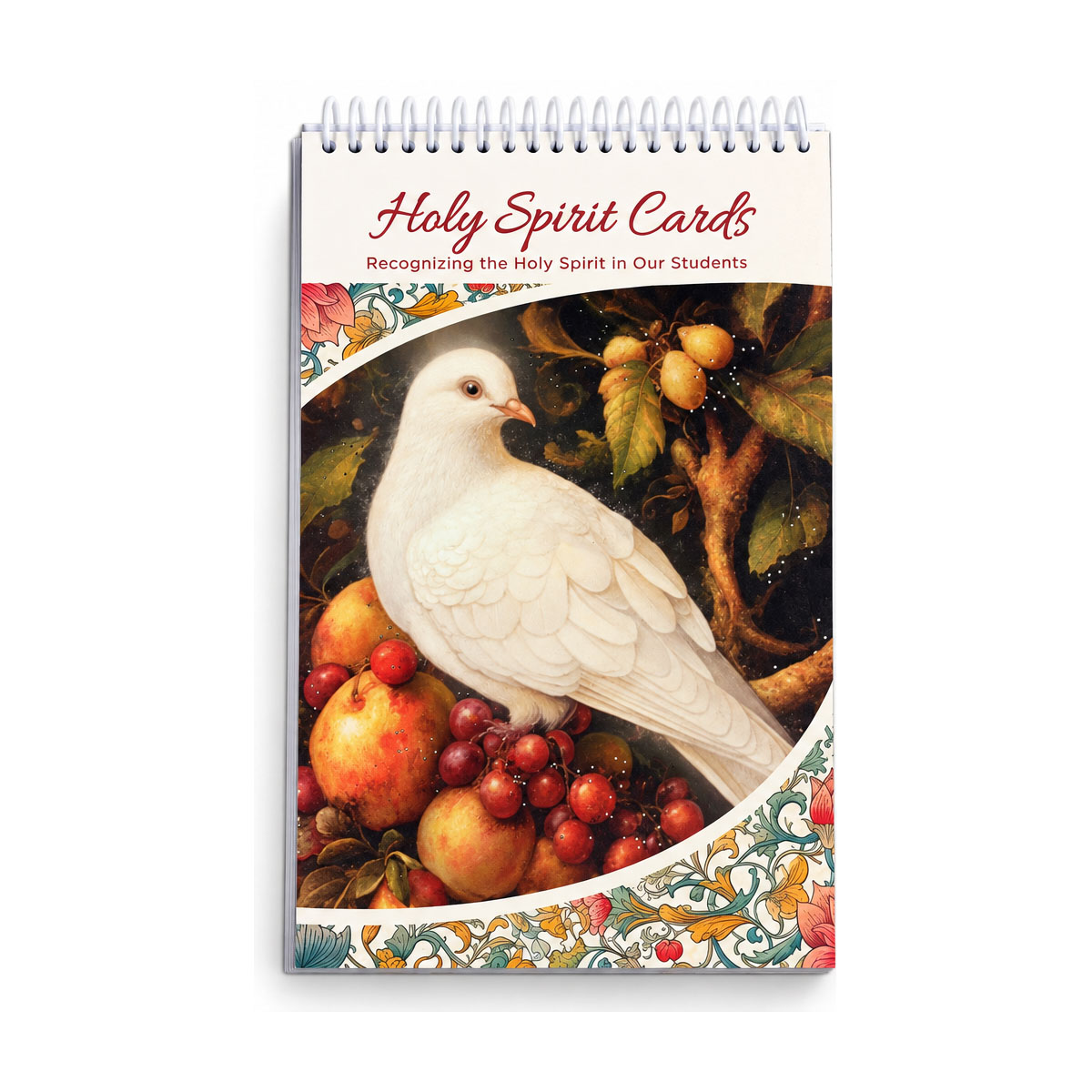
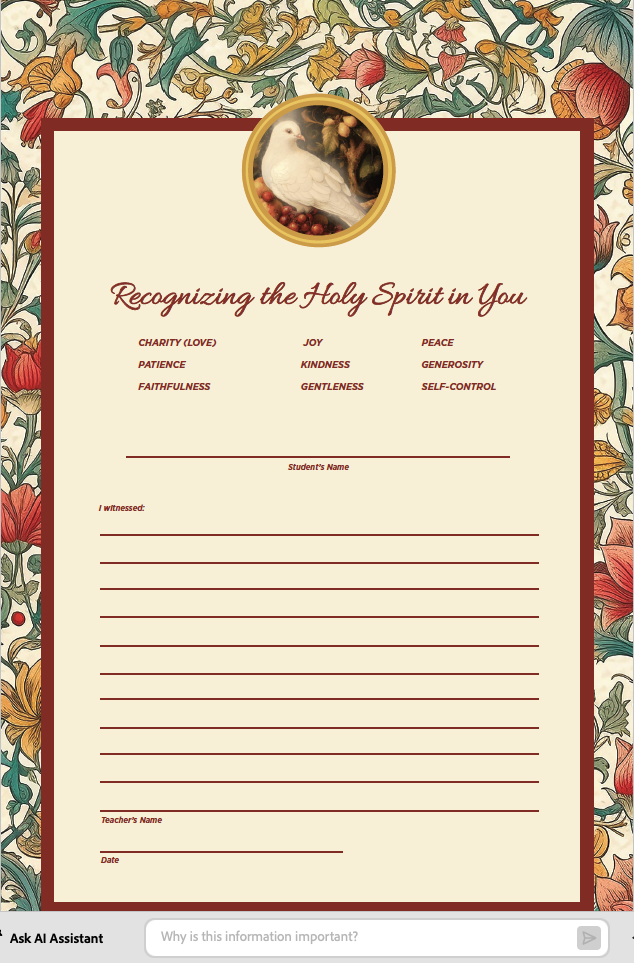
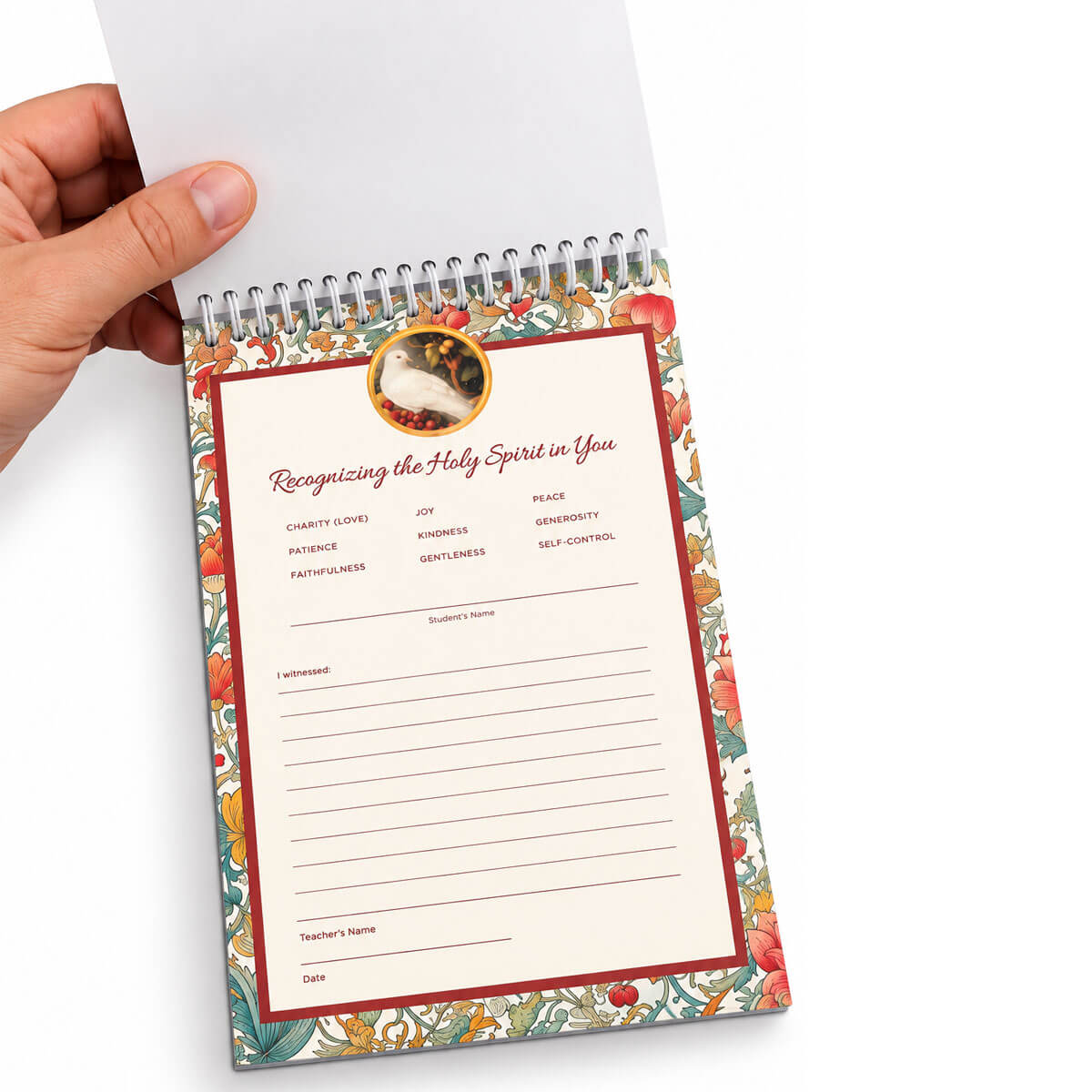
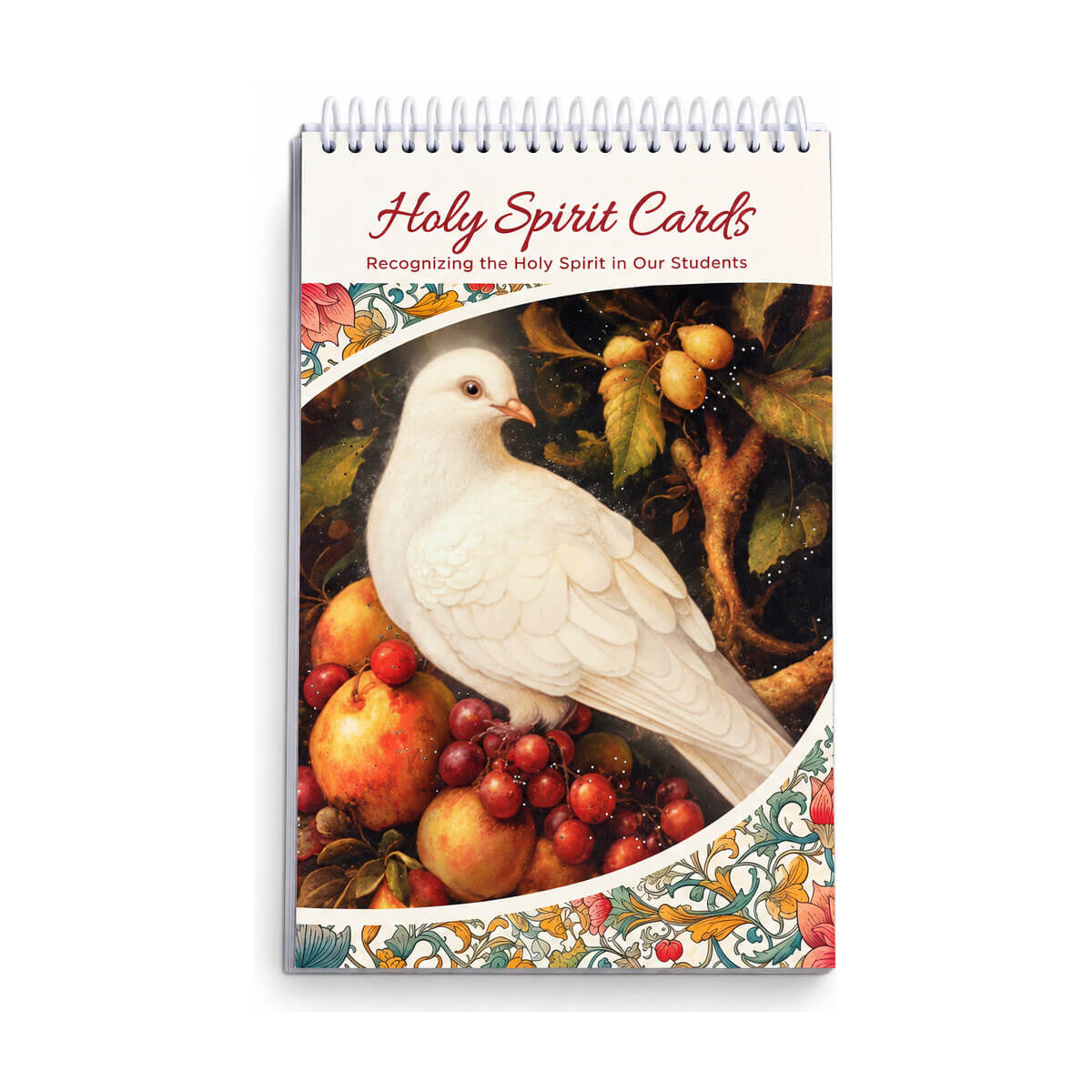
A spiral-bound set of 50 Holy Spirit Cards designed to support and enhance your classroom by helping students recognize the presence and action of the Holy Spirit in their lives. These beautiful cards can be used as a practical tool for formation, encouragement, and communication.
Holy Spirit Cards are not generic awards—they are meant to call attention to grace. They invite children and their families to notice how God is working in small but significant ways.
• These cards affirm individual effort, even if the action seems small.
• The goal is not to compare students, but to highlight how the Spirit meets each child uniquely.
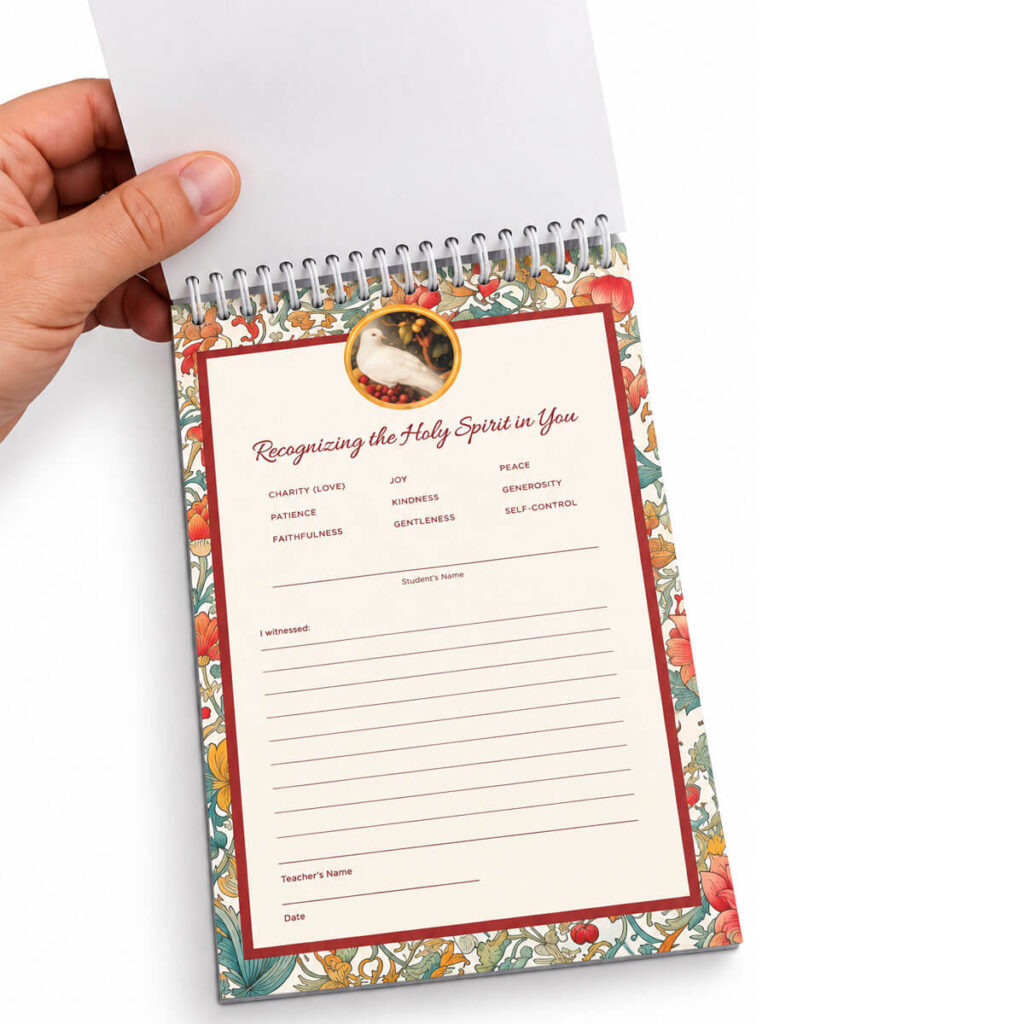
The word “fruit” in Galatians 5 comes from the original Greek word karpos, which is singular—not plural. This tells us something important: there is one unified fruit of the Spirit, not nine separate fruits. The nine words St. Paul uses—love, joy, peace, patience, kindness, generosity, faithfulness, gentleness, and self-control—describe the characteristics of one fruit, which is the visible evidence of the Holy Spirit at work in our lives.
WHAT THIS MEANS FOR US AND OUR STUDENTS
• Every person is created with a unique blend of temperament and personality. These are part of who we are naturally.
• The Fruit of the Holy Spirit, however, is not merely about personality traits—it is the supernatural evidence of the Holy Spirit dwelling in us and transforming us (this includes our weaknesses) to become more like Christ.
• St. Paul urges all Christians to bear the full fruit, not just one or two characteristics. While we may bear witness to some traits more easily than others, the Holy Spirit desires to form all nine characteristics in every believer. This is possible only through grace.
“If we live by the Spirit, let us also be guided by the Spirit.” Galatians 5:25
SPIRITUAL GROWTH TAKES TIME
Just like fruit on a tree, the fruit of the Spirit grows and matures over time. Some traits may take longer to develop—and that’s okay! Even the smallest bud is evidence that the Holy Spirit is alive and active in a person.
This growth begins at Baptism, when the Holy Spirit first dwells within us, and it continues as we open ourselves to grace through prayer, the Sacraments, and our daily cooperation with God’s will.
Jesus taught us to ask God for everything. Recognizing our weakness allows us to see our need for God and His grace. He will give us the graces we need so that He may increase while we decrease; our weakness makes us strong.
Teachers are privileged to help students recognize the budding fruit of the Holy Spirit in themselves and others. Even small moments of growth are signs of God’s work in their hearts.
“For when I am weak, then I am strong.” 2 Corinthians 12:10
Encouraging children to recognize and respond to these movements helps them understand their dignity as children of God and their daily call to holiness. With the Holy Spirit’s help, they can bear His fruit more fully—day by day, step by step, grace by grace.
When a student reflects one of the nine characteristics of the Fruit of the Holy Spirit:
1. Circle the virtue (e.g., love, patience, self-control) that best matches the moment observed.
2. Briefly describe the situation that was witnessed.
3. Quietly and personally recognize the student, affirming their growth.
4. Send the Holy Spirit Card home with the student to share the moment with their family.
WHY IT MATTERS
Holy Spirit Cards are not generic awards—they are meant to call attention to grace. They invite children and their families to notice how God is working in small but significant ways.
• These cards affirm individual effort, even if the action seems small.
• The goal is not to compare students, but to highlight how the Spirit meets each child uniquely.
EXAMPLE
A student who typically struggles to wait their turn makes a noticeable effort to do so. Even if other students wait patiently by default, this is a moment of real growth for that student—and a sign of the virtue of patience being cultivated through grace.
QUIET AND PERSONAL RECOGNITION
Unlike typical student recognition programs, Holy Spirit Cards are an intentionally humble and personal approach to acknowledgement.
• These are not meant to be part of a reward system or school-wide announcement.
• While spontaneous, public recognition may occasionally occur, we encourage teachers to treat these notes as a quiet acknowledgment between teacher, student, and parent.
• This helps avoid creating the impression that only certain students are “good” and others are not. The goal is to nurture virtue, not competition.
A FINAL THOUGHT
Whether the virtue observed is natural to a student’s temperament or the result of intentional growth, both are worthy of recognition. In each case, we acknowledge that the Holy Spirit is present and active—and we help our students and their families see that too.
The Fruit of the Holy Spirit is not a sum of virtues we develop on our own; it is evidence of divine qualities that grow in us as we remain close to God. St. Paul describes these characteristics in Galatians 5:22-23, not as separate fruits, but as one singular fruit—karpos—manifested in nine beautiful ways.
Below are brief definitions as the Church understands them and real-life examples of each to help teachers recognize and encourage the visible signs of the Spirit at work in their students.
ROOTED's NEW 2nd Edition of our K-5 segment is called REVEALED. Literature-based…

ROOTED's NEW 2nd Edition of our K-5 segment is called REVEALED. Literature-based…

ROOTED's NEW 2nd Edition of our K-5 segment is called REVEALED. Literature…

ROOTED's NEW 2nd Edition of our K-5 segment is called REVEALED. Literature…

ROOTED's NEW 2nd Edition of our K-5 segment is called REVEALED. Literature…

Our new USCCB Conformity List Edition K-5 segment is called REVEALED. Literature-based…

Creado con las escuelas católicas y las familias en mente ... Nuestra…

Created with Catholic schools and families in mind... Our Lady of Fatima…
