
Help Children & Teens Remember Our Story
October 14, 2026
The Forgotten Love Story
In Nicholas Sparks’s The Notebook, the climactic nursing home scene turns on a fragile moment of recognition. As Noah finishes reading their life story, Allie briefly remembers him & the love they share. But just as quickly, her memory fades away & anxiety & confusion return. This scene gives us a moving image of what can happen when someone loses hold of the story that once gave life meaning.

This is us. All of us. Humanity has forgotten our story: the love story between God & humankind, whom He created in His image, male & female. We have forgotten who made us, who we are, why we are here & whose love ultimately calls us home. The Bible is the greatest love story ever told. It tells of creation, the wound of sin, God’s patient faithfulness, Jesus’ saving death & Resurrection, culminating in the hope of eternal life. The story is not merely about people trying to find God; it is about God continually seeking each one of us & inviting us into communion with Him, no matter what.
Children & teens need to hear this story—not merely as facts or rules, but as the guardrails God lovingly invites us to live within, in which each person has a role to play. Not like acting to be a character in a Broadway play, but rising above ourselves & our selfishness to live the best life God calls us to live. We increase the peace, hope, joy & happiness God made us for when we heed His loving laws—His “Manufacturer’s Best Practices,” if you will. From the beginning of time, God knew when & where each person would exist. Each of us was willed by the Father to participate here & now, to cooperate with His sufficient grace to strive for holiness—to make a positive difference on earth & then return to Him in heaven. The Church’s pastoral framework for educating children, teens & young adults presents the “Road to Emmaus” as a model: Jesus listens to His disciples (His students), helps them interpret their lives in light of the Gospel & sends them forth with renewed purpose & understanding.
Every Life is a Journey

Each of us is on a journey. The Christian life is not a quest to become a flawless hero who never fails; it is a pilgrimage with Christ, who meets us along the way & teaches us to keep choosing the good—day by day, moment by moment. The more we train our wills to choose the good, the easier it becomes. Our story has meaning not because we control every turn, but because God is present in it & calls us toward Him, as our free will allows us to choose to grow closer to Him or turn further away from Him. There are very few neutral choices.
Stories can awaken a child’s sense of awe & wonder at the journey. In fairy tales & swashbuckling adventures, characters encounter obstacles, make choices, fall short & find the courage to continue. Young listeners/readers can safely consider the consequences of the characters’ choices & ask what that kind of courage, loyalty & sacrifice might look like in the story of their own lives. In the July 17, 2024, Letter of His Holiness Pope Francis on the Role of Literature in Formation, the pope writes that “In reading, we immerse ourselves in the thoughts, concerns, tragedies, dangers, and fears of characters who in the end overcome life’s challenges. Perhaps too, in following a story to the end, we gain insights that will later prove helpful in our own lives (p.17).”

Victor Frankl, reflecting on Man’s Search for Meaning after enduring & surviving the Holocaust, emphasized the human need to find meaning in life. His insight can remind us that young people need more than encouragement to be strong: they need to know that suffering does not make them forgotten or alone. Not that pain is good in itself nor that we should pretend that every hardship has an easy explanation. But the Christian story proclaims that Christ entered human suffering & that suffering does not have the final say. The Church recognizes the importance of helping our youth place painful experiences “into a context that recognizes the meaning & significance of shared human experiences… as well as “in the dissemination and wider distribution of stories and encounters that give meaning, direction and orientation to lived-out experiences” (Pontifical Academy for Life, Pandemic and Challenges for Education: Children and adolescents dealing with Covid19, p. 1. Vatican City, December 22, 2021).
Stories Form Hearts for Ordinary Heroism
Stories can help virtue take root—not as a dry list of demands, but as an attraction to what is good—to train our free will to forsake short-term pleasure for the long-term good. A young person who admires a character’s honesty or courage may begin to imagine those virtues as possible in ordinary, daily life. Plus, they see the long-term effects of those virtues woven into the story’s ending. Literature can draw readers into the lives & struggles of others, broadening their understanding of the human experience. William Kilpatrick, in Why Johnny Can’t Tell Right from Wrong, Chapter 11, “Life is a Story” argues that fairy tales & adventure stories can prepare children for what he calls “ordinary heroism”: the perseverance required for commitments such as marriage, parenthood, or a demanding vocation. Much of that heroism is quiet—showing up faithfully day after day, even when no one applauds.
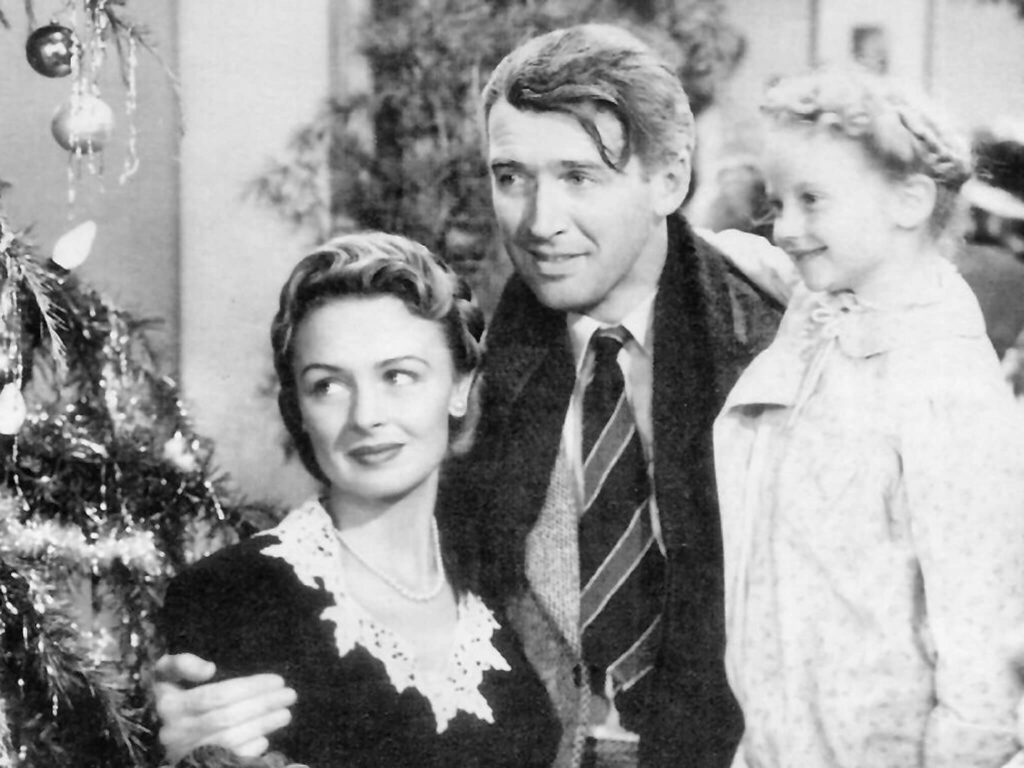
Frank Capra’s It’s a Wonderful Life makes a similar point. George Bailey, overwhelmed by hardship, cannot see the good he has done. Through a visit from Clarence, his guardian angel, he comes to recognize how his ordinary, seemingly mundane choices have shaped his family & community. His life matters, not because it is spectacular, but because he has loved & served the people entrusted to him. He has honored his duties & commitments— an unsung hero’s life.
Tell the Story—& Listen
Children & teens need to understand the truth of the human story according to God’s plan & realize that they have an important part to play in it. Sharing Scripture, saints’ lives, meaningful fiction & family stories all help facilitate this growth & realization. Ask them about what a character’s choices reveal; connect the conversation to that young person’s real joys & struggles in their own life — & listen. The Human Story of Salvation History does not replace clear teaching of the Catholic faith, but it can give an overall framework to understanding how it all fits together. Using story to teach in general helps lessons’ truths take root in memory, imagination & love.

We tell children the story of God & making the pinnacle of His creation to share in His love, so that, when fear or confusion comes, they may remember: They are created, cherished, called & never abandoned. It is a fact. They are a gift from God & nothing can change that— not experiences, feelings, failures, or achievements. Nothing.

Written by, Evie Estes,
Curriculum Production Manager,
Editor, Sales & Website Support
Share